Led by Anastasios (Andy) Tzanidakis, University of Washington astronomers uncovered rare evidence of a dramatic collision between two planets 11,000 light-years away — a discovery made by analyzing years of archival telescope data. The team observed a normally stable star, Gaia20ehk, suddenly flickering due to a massive cloud of hot debris likely created by a catastrophic planetary impact. The event may resemble the ancient collision that formed Earth’s Moon, offering a rare window into how planetary systems — and potentially habitable worlds — take shape. With next-generation surveys from the Vera C. Rubin Observatory, researchers expect many more discoveries like this in the coming decade.
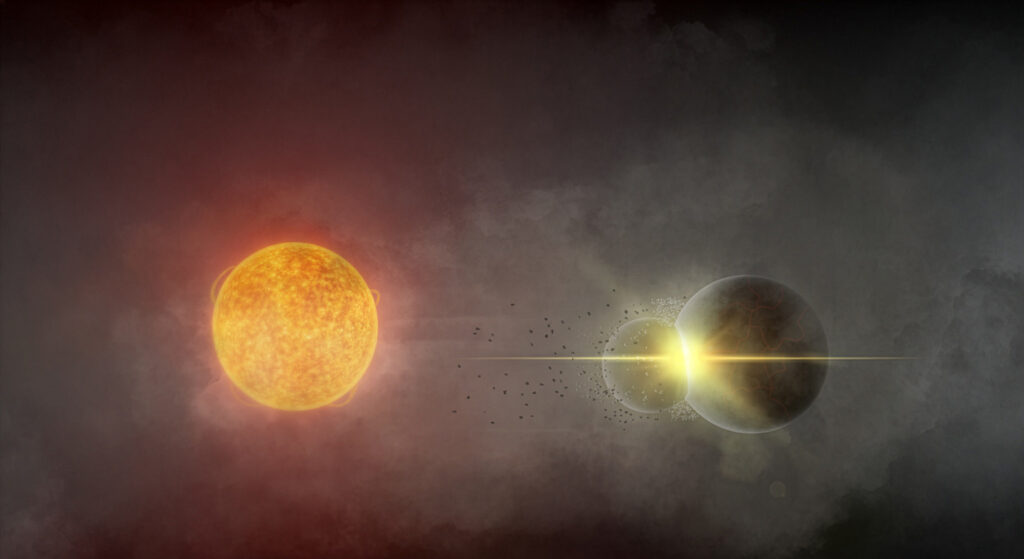
Media coverage: BBC Sky at Night Magazine, New York Post, MSN, ScienceDaily, EarthSky, Universe Today,
NPR KUOW podcast, Pour La Science, University of Sheffield Science Kids Magazine, Dutch astronomical magazine Zenit, SETI Institute Youtube Interview.
Read UW News Article here.