Letter from the Director

James Davenport
Prof. James Davenport

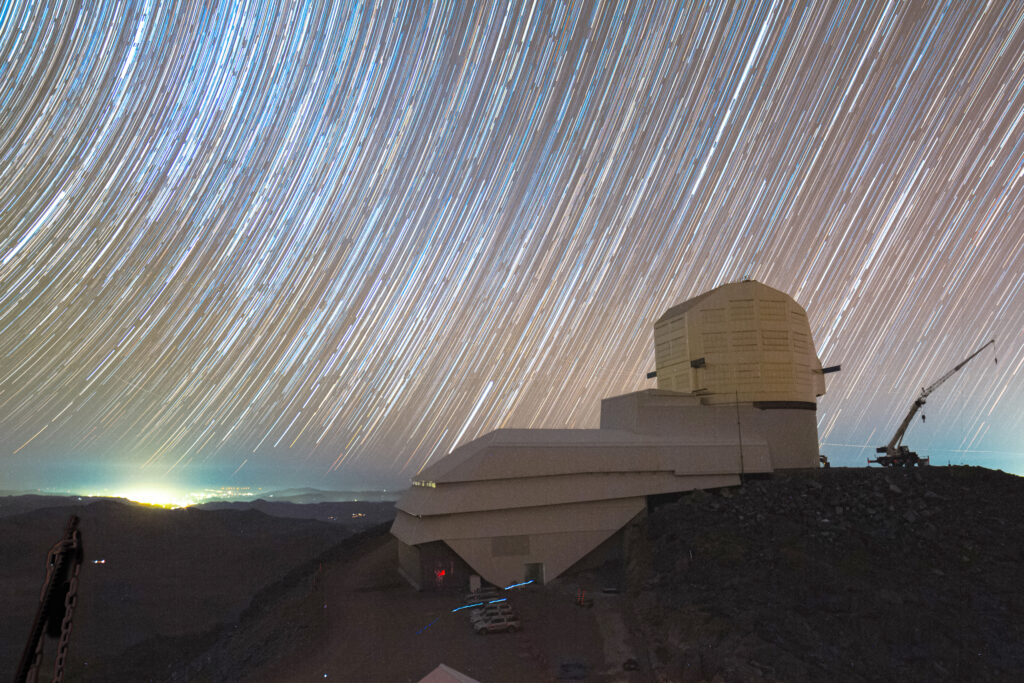
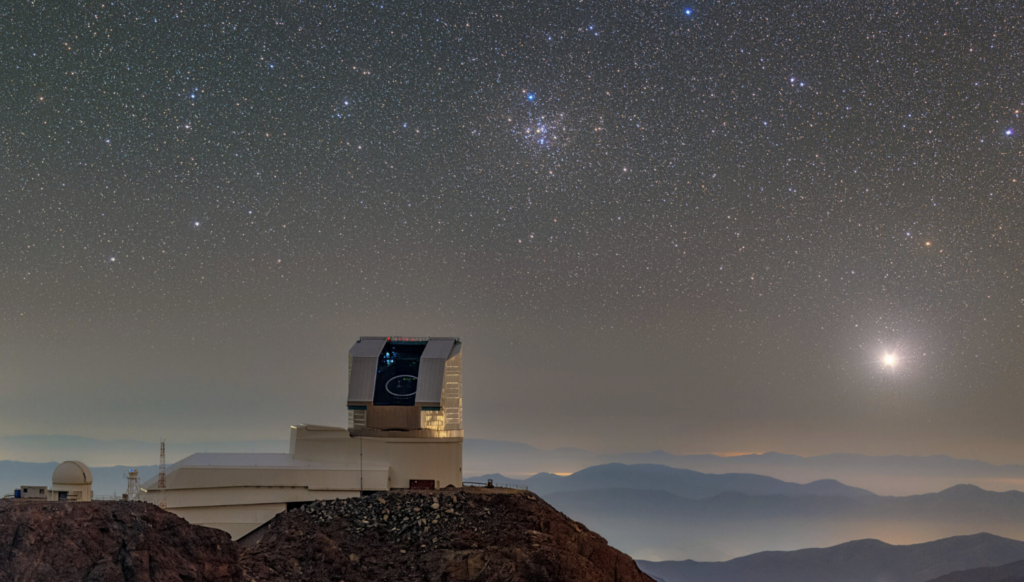
This Spring at DiRAC we are watching something amazing blossom – and I don’t just mean the iconic Cherry Blossoms at the University of Washington, which were in peak bloom at the end of March this year! At the end of February, after nearly 20 years of development, the Rubin Observatory began its first phase of science. Real-time “Alerts” are now flowing from the Simonyi Survey Telescope in Chile, and being broadcast to astronomers around the world. It was a powerful and joyous moment, watching Prof. Eric Bellm and Dr. Ian Sullivan, showcase the very first alerts to the entire Rubin/LSST team.

Our goal now is to discover the surprises that will bloom from this new data. Last week DiRAC wrapped up Winter Quarter with a “First Alert Sprint”, where astronomers of all experience levels from the UW Astronomy Department came together to explore the millions of Alerts already released. In one day we discovered new pulsating stars in the far reaches of our Galaxy, looked at some “nearby” supernovae (only 900 million light years away!), and recovered comets whose tails had pushed them away from their “expected” positions,

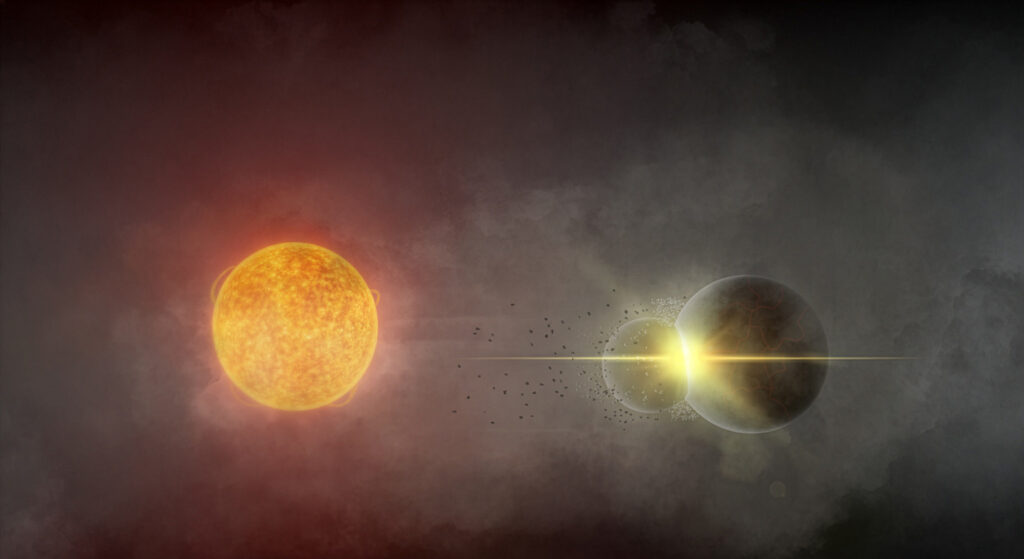
On a personal level, I’m extremely proud of soon-to-be PhD, Andy Tzanidakis, whose recent discovery and analysis of “Gaia-GIC-1” has been getting some well deserved attention. Found using Gaia data, this is one of the very few planetary giant impact candidates ever observed… and based on its position in the sky it should be a perfect test case for Rubin! In the 10-year LSST survey, we might discover hundreds of such systems, helping determine how common Moon-forming impacts are. Well done Andy!

And that’s just one of the many new excellent studies we’ve highlighted in this Quarter’s Newsletter and on our website. As always, be sure to check back regularly for updates from our team… I can’t wait to see what other surprises are waiting to bloom this coming Spring!

Keep looking up!

James Davenport

Director, DiRAC Institute

Meet DiRAC’s Postdoctoral Fellow: Joseph Murtagh

I’m Joe, a new DiRAC Postdoctoral Fellow working within the solar system group here at UW. I came over from Queen’s University Belfast in Northern Ireland, where my PhD focused on preparing for the LSST at the Vera C. Rubin Observatory – specifically modeling how many outer solar system objects like Centaurs and Neptune Trojans the survey will detect, and how well we’ll be able to characterize them. 

Joseph Murtagh


Now that Rubin is actually producing data, I’m in the exciting position of being able to test my predictions for the first time. My focus at DiRAC is going to be on using early Rubin observations alongside years of archival survey data to build composite light curves to get a more complete picture of how active outer solar system objects behave, which is something that just hasn’t been possible at this scale before. In parallel, I’m looking forward to comparing real detections against my population-level predictions I built during my PhD, and using both to think about which objects are most in need of targeted follow-up and where best to do that.


Alongside that simulation work, I have also studied real objects like Chiron and 103P using survey data from ATLAS and ZTF, and follow-up observations from facilities like LCO and the Liverpool Telescope in order to probe their activity evolution of many years. From this, I’ve managed to capture the longest continuously monitored and densely sampled active period yet recorded for Chiron over the last 50 years, providing a unique opportunity to study the decay of Centaur activity in real time.

DiRAC Annual Report 2025

Our 2025 Annual Report is now available, highlighting a remarkable year for DiRAC.

From new discoveries and major survey milestones to growing collaborations and student achievements, the report captures a year in review and celebrates the breadth of our community’s work. We encourage everyone to take a moment to reflect on the team’s accomplishments and the momentum we’ve built together.

Thank you to everyone whose contributions made 2025 such a successful year.

Previous Annual Reports

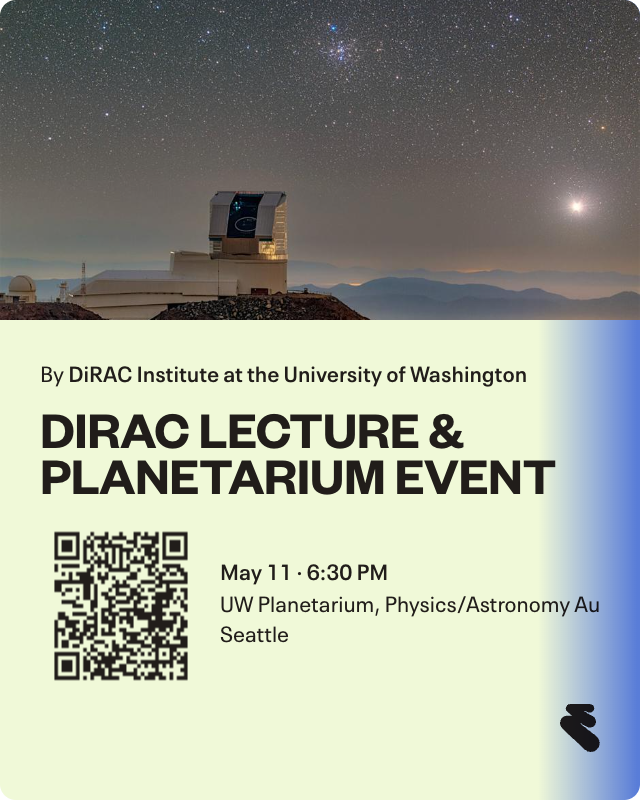
DiRAC Lecture & planetarium event | May 11

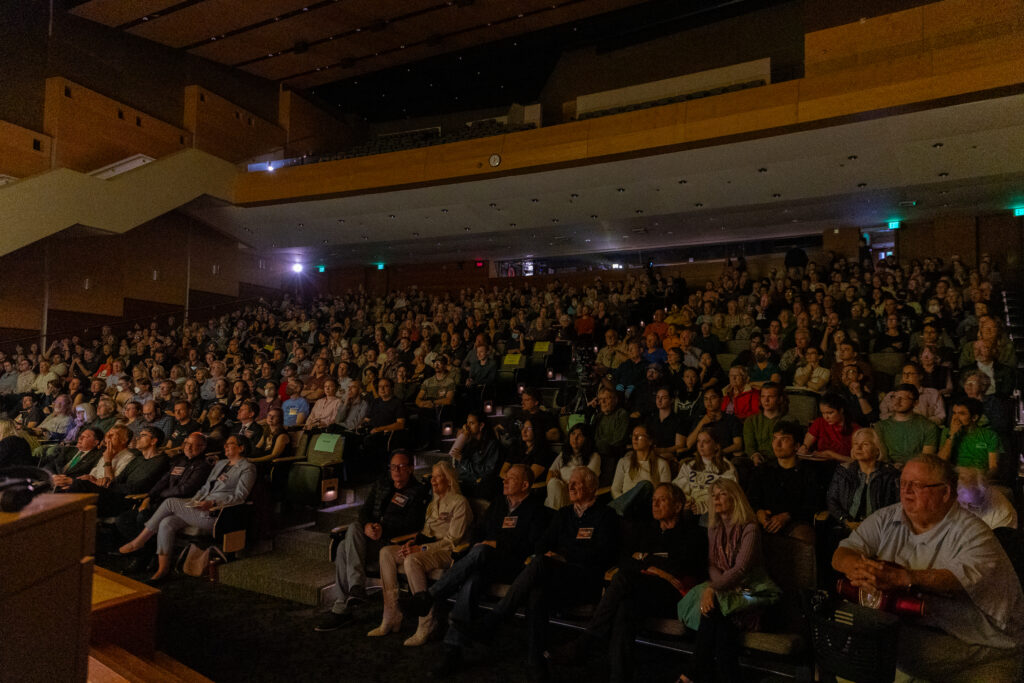
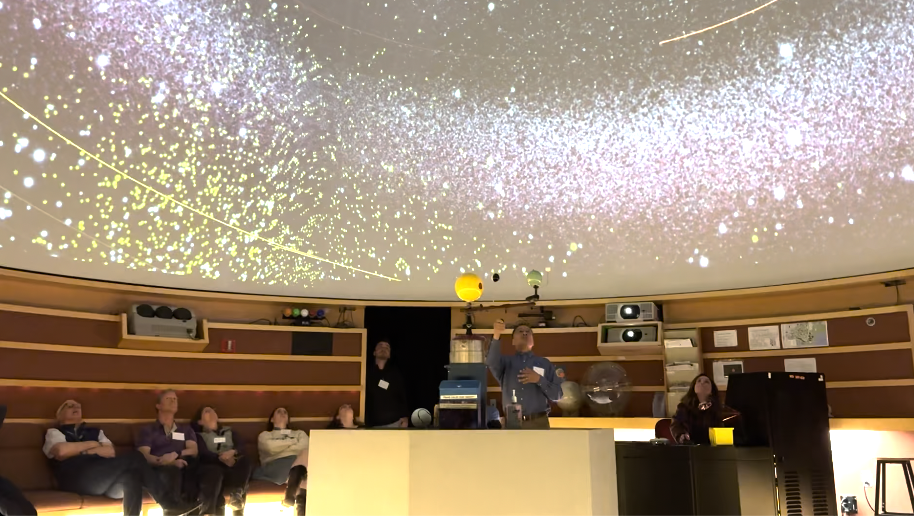
Thank you to everyone who joined us for DiRAC February planetarium event! It was wonderful to see such a great turnout. We’re excited to host another DiRAC event, featuring an engaging lecture by University of Washington’s Prof. Ivezić followed by a planetarium show.

REGISTER TODAY Monday, May 11 | 6:30 – 8:30 PM

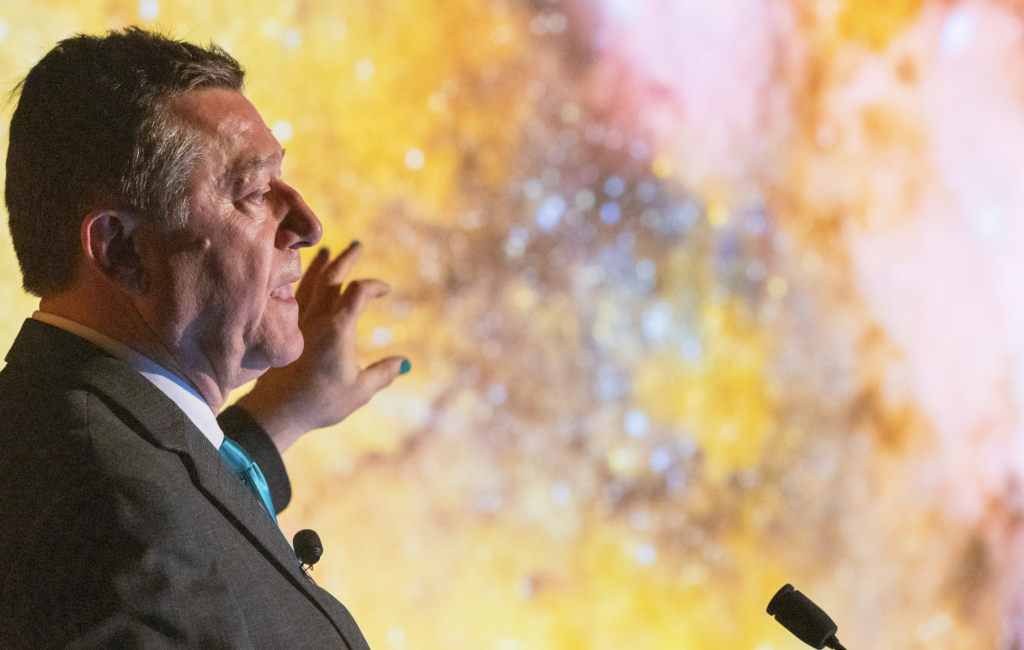
Prof. Željko Ivezić

Join us for an evening exploring Rubin science and the exciting discoveries ahead. We hope to see you there — register early to reserve your spot.

The Vera C. Rubin Observatory’s Legacy Survey of Space and Time (LSST), the most comprehensive opticalastronomical sky survey ever undertaken, will obtain panoramic images of the night sky every clear nightfor ten years, starting this year. The resulting 60 petabytes of imaging data, essentially a digital colormovie of the night sky, will include about 20 billion galaxies and a similar number of stars, and will beused for investigations ranging from cataloging potentially dangerous near-Earth asteroids to fundamentalphysics such as characterization of dark matter and dark energy. Prof. Ivezic will describe scientific goals behind thisproject, showcase its early data, and discuss remaining fine tuning of the Observatory in order to start LSST.

S P E A K E R

Željko Ivezić is a professor of astronomy at the University of Washington, Head of Rubin’s Legacy Survey of Space and Time and former Director of Rubin Observatory Construction. Željko’s scientific interests are in detection, analysis and interpretation of electromagnetic radiation from astronomical sources, with emphasis on large datasets and machine learning.

P R O G R A M

6:30 PM – 7:30 PM Lecture

7:30 PM – 8:30 PM Planetarium Show & Q&A

Ultra-fast rotating asteroids in the news

In the October 2025 newsletter, we reported the discovery of 19 ultra- to super-fast rotating asteroids identified among the first roughly 2,000 asteroids discovered with the NSF-DOE Vera C. Rubin Observatory, including the fastest spinning large asteroid found to date, 2025 MN45.

The findings were published in a paper in The Astrophysical Journal Letters on 7 January 2026, led by UW Astronomy Affiliate Assistant Professor Sarah Greenstreet, UW Astronomy graduate student Chester Li, UW Astronomy postdoctoral scholar Dmitrii Vavilov, UW Astronomy undergraduate student Devanshi Singh, and their colleagues. Coincident with the paper publication was a Rubin Observatory press release and a press conference held at the 247th meeting of the American Astronomical Society (AAS) in Phoenix, Arizona.

The findings were also featured in a UW News press release, UW’s student-run The Daily, and the Spring 2026 issue of the UW Magazine. Shortly after the paper publication and press conference, the story was picked up by local, national, and international media outlets, including NBC Bay Area News, Geekwire, BBC Newsround, Gizmodo, Space.com, Popular Science, Scientific American, Science News, Discover Magazine, Universe Today, BBC Sky at Night Magazine, Nature Astronomy, KNKX Public Radio, NPR’s All Things Considered, and more. 

Rubin Observatory launches real-time monitoring of the sky with thousands of alerts

The first Rubin real-time alert has arrived, the event was led by Prof. Bellm joined by his team at the University of Washington. 

Brianna Smart, Eric Bellm, Ian Sullivan

This milestone marks the beginning of a new era in time-domain astronomy, with rapid alerts enabling discoveries across the dynamic sky. Learn more about this exciting achievement and what it means for Rubin science in the full press release here.

Excerpt from the UW News Press Release

On Feb. 24, astronomers’ computers around the world lit up with a deluge of cosmic notifications — 800,000 alerts about new asteroids in our solar system, exploding stars across the galaxy and other noteworthy changes in the night sky. The discoveries were made by the Simonyi Survey Telescope at the NSF-DOE Vera C. Rubin Observatory in Chile and distributed globally within about two minutes.

That flurry of notifications marked the commencement of the observatory’s Alert Production Pipeline, a sophisticated software system developed at the University of Washington that is eventually expected to produce up to seven million alerts per night.

“Rubin’s alert system was designed to allow anyone to identify interesting astronomical events with enough notice to rapidly obtain time-critical follow-up observations,” said Eric Bellm, a research associate professor of astronomy at the UW who leads the Alert Production Pipeline Group for the Rubin Observatory. “Rubin will survey the sky at an unprecedented scale and allow us to find the most rare and unusual objects in the universe. We can’t wait to see the exciting science that comes from these data.”

UW astronomers collect rare evidence of two planets colliding

Led by Anastasios (Andy) Tzanidakis, University of Washington astronomers uncovered rare evidence of a dramatic collision between two planets 11,000 light-years away — a discovery made by analyzing years of archival telescope data. The team observed a normally stable star, Gaia20ehk, suddenly flickering due to a massive cloud of hot debris likely created by a catastrophic planetary impact. The event may resemble the ancient collision that formed Earth’s Moon, offering a rare window into how planetary systems — and potentially habitable worlds — take shape. With next-generation surveys from the Vera C. Rubin Observatory, researchers expect many more discoveries like this in the coming decade.

artists rendition of planet collision (credit: A. Tzanidakis)
Lead author Andy Tzanidakis’ rendering of the planetary collision he suspects occurred around star Gaia20ehk in 2021. Photo: Andy Tzanidakis

Media coverage:  BBC Sky at Night MagazineNew York PostMSNScienceDailyEarthSkyUniverse Today,
NPR KUOW podcast, Pour La Science, University of Sheffield Science Kids Magazine, Dutch astronomical magazine ZenitSETI Institute Youtube Interview.

Read UW News Article here.

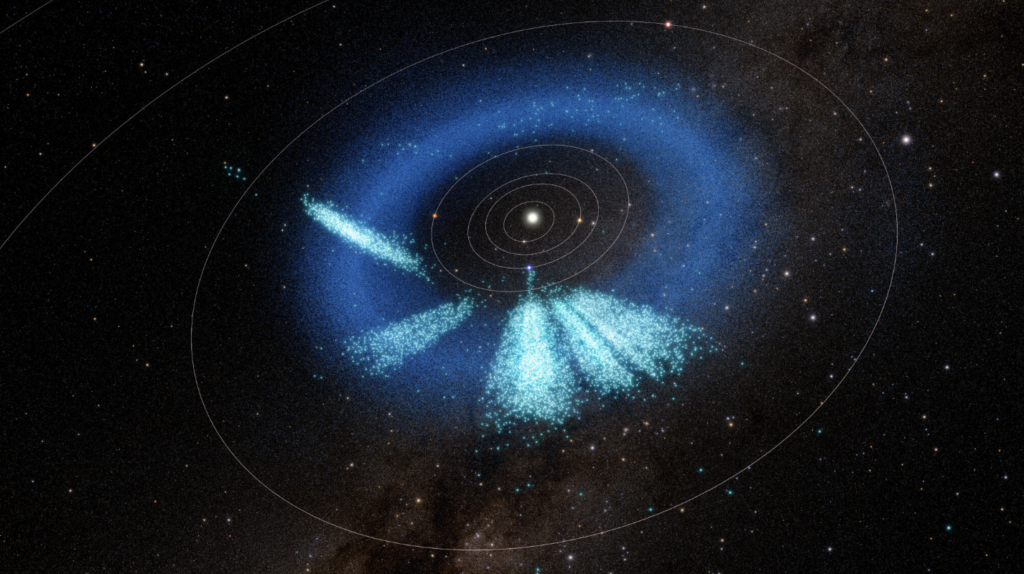
Early data from Rubin Observatory reveals over 11,000 new asteroids

A rendering of the inner solar system shows the asteroids discovered by the Vera C. Rubin Observatory in light teal. Known asteroids are dark blue. Photo: NSF–DOE Vera C. Rubin Observatory/NOIRLab/SLAC/AURA/R. Proctor. Star map: NASA/Goddard Space Flight Center Scientific Visualization Studio. Gaia DR2: ESA/Gaia/DPAC. Image Processing: M. Zamani (NSF NOIRLab)

Using preliminary data from the Simonyi Survey Telescope at the NSF–DOE Vera C. Rubin Observatory, scientists led by Prof. Mario Jurić and the Rubin solar system team at the University of Washington have discovered over 11,000 new asteroids in our solar system. “This first large submission after Rubin First Look is just the tip of the iceberg and shows that the observatory is ready,” said Mario Jurić, a UW professor of astronomy and leader of Rubin’s solar system team, which is located at the University of Washington.

Read full UW story here, adapted from a  press release by NOIRLab.